

There are few things as sought after, nor as elusive as happiness, but what exactly is happiness? Are we born with it? Is there a secret source that we can tap into, or is our obsession with being happy actually dooming us to a life of discontent?
Delving into the question of happiness leads us deep into alabyrinth of spirituality, philosophy, religion, gender, culture, biology and psychology. It is the subject of thousands of books, countless contemplations and endless exploration by neuroscientists. But does it really have to be so complicated? Can’t we break it down and come up with some kind of cheat sheet for happiness? Actually, thanks to the rise of the positive psychology movement, happiness has been taken out of the esoteric realms and planted firmly in the scientific arena, and the formula is surprisingly simple. First, we need to find out where to look.
For sure we are all familiar with the thrill of pleasure-based happiness, that warm fuzzy feeling that comes when something good happens – a promotion at work, an exotic beach holiday, or even the simple joy of snuggling up to someone you love. We live for these good times, they make life worthwhile, but these moments are fleeting as they are emotional responsesto a set of circumstances. We can’t be laughing all the time, leaping from one high to another, constantly feeling on top of the world, it’s just not sustainable. Besides, people would think we were mad. Even so, it is common to get dragged down by unfulfilled expectations of happiness. As Darrin McMahon, author of Happiness: A History points out, “The idea of happiness as our natural state is a peculiarly modern condition that puts a tremendous onus on people. We blame ourselves and feel guilty when we’re not happy.”
So, have we been looking for happiness in all the wrong places? SBS poses this question to Japanese-born Eiji Han Shimizu, who produced the multi-award winning documentary, Happy, and provides the perfect analogy. “I studied hard, exercised, had a good job; I had a convertible and a beautiful girl on my arm. I had all the ingredients of happiness, but I discovered that in my pursuance of happiness, I had climbed the wrong mountain.” Intrigued by the concept of finding genuine, lasting happiness, he and his friend, renowned director, Roko Belic, embarked on a six-year quest around the world to make Happy.
From the seething streets of Calcutta, to the dizzying heights of Bhutan, the misty Bayou swamps of Louisiana and into the neuroscience labs of top universities, the pair were on a mission to find a universal formula for happiness. Shimizu describes a moment, after many months on the road when they had an epiphany of the, “Oh my God did you see that?” variety. They had discovered a commonality in happy people around the globe. It was contentment! “There aren’t selfish happy people, there aren’t egotistical happy people,” says Shimizu.
“Most of us look for happiness outside, such as compliments, money, physical gratification,” yet they discovered the most extraordinarily happy people were those that didn’t have much at all, but were content; they had a skill of looking within, as well as “a certain presence typified by humility, warmth and good heartedness.”
Neuroscientists and psychologists agree. Life is hard, it’s full of ups and downs, but happy people have a way of turning inwards and dealing with situations, rather than waiting for external conditions to provide them with happiness. We all know the dream – the one where you win the lottery and live happily ever after, but an experiment Lottery winners and accident victims, revealed suprising results. Researchers interviewed people who had won the lottery and those who had been paralysed in traumatic accidents. Of course the lottery winners were the happiest in the moment, but fast forward six months and there wasn’t a huge difference in happiness levels, in fact the accident victims reported more joy from simple daily pleasures, such as chatting with friends or sharing a joke. It is called hedonistic adaptation. You see, happiness is subjective, it’s feeling better than we did the day before.
While traditionally neuroscience concentrated on the triggers for depression and mental illness, the relatively new positive psychology movement examines human flourishing. This science of happiness, has narrowed the ‘feel-good centre’ of our brain down to the left prefrontal cortex, which is more active when we are happy. Sonja Lyubomirsky Psychology Professor, and author of The How of Happiness, claims that up to 50% of our happiness is genetically pre determined. Another 10% is dependent on our circumstances – our jobs, where we live etc., but the remaining 40% is based on daily activities and recent experiences – which means we potentially have the opportunity to get happier by changing our behavior. The human brain is highly malleable, and the process of neuroplasticity allows us to create new neural pathways, which is why Cognitive Behavioral Therapy – which restructures thought processes – is so effective in treating depression and anxiety. Much like we exercise our muscles to get physically fit, we can also train our minds to create a habit of happiness. You could look at it as a scientifically-backed daily happiness work out.
Happiness Cheat Sheet
*Practice random acts of kindness. Ever heard of the ‘helper’s high’? Neuroscience proves that acting with a true spirit of generosity releases endorphins (the body’s natural opiates.)
*Be compassionate. Understand what others are experiencing, it will give you greater connection.
*Develop resilience. Bad things happen to us all, but quite often it’s the thoughts attached to something, and not the event itself that causes the most suffering.
*Be optimistic. Why feed the darkness? Life is much more enjoyable when you look on the bright side.

Published in Insight Magazine, Bali
The Indonesian archipelago is home to the richest assortment of coral species in the world, but its reefs are vanishing as global warming, pollution and unsustainable fishing and tourism practices take their toll.
Indonesia’s appalling conservation record is well documented and it would be easy to write yet another article about imminent disaster; but I am sick of all the doom and gloom, because with destruction comes regeneration. While politicians and environmental agencies gather in endless global summits and engage in pointless debates about how to fix things, often the most effective change is happening at a grassroots level, and I knew that somewhere in Bali someone would be doing something to save the reefs.
I find my story in the north of the island, in a humble village that sits in the shadows of the mountains. Just meters off Pemuteran’s black sandy shore lies the Karang Lestari (Everlasting Reef) Project, one of the largest and most ambitious coral restoration projects in the world. A reef that had badly damaged is once again thriving due to a unique technology called Bio-Rock, which uses electric currents to stimulate the growth of coral.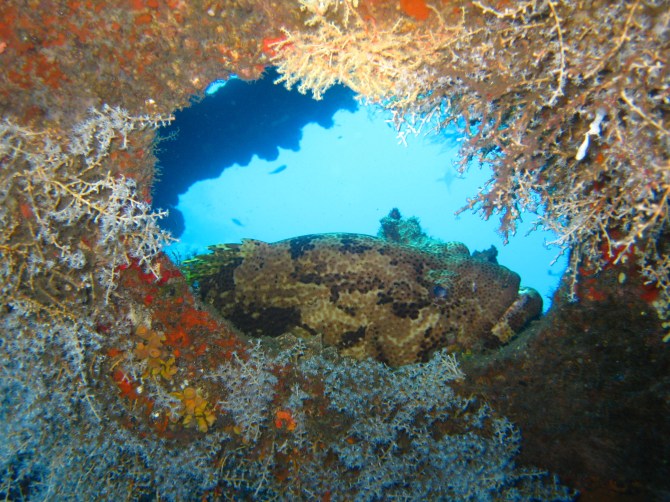
All coral photographs courtesy of Rani E. Morrow-Wuigk
I have no idea what to expect, but this is unbelievable, a kind of futuristic underwater fantasy world. Fifty large steel structures span over 1000 feet and take the form of a caterpillar, a whale, an igloo, a dome, a tent, and a flower, all covered in a profusion of brightly coloured coral. Hundreds of tiny blue fish hover above the dome, bat fish flitter amidst the flowers. I see starfish, lionfish, a school of snapper and cheeky little Nemos everywhere. Soft pastel corals sway in the current and purple tipped table corals sprawl across the metal bars. The reef surrounding the structures is also thriving, everywhere I look I see life and vibrant colour. Natural power is the plan for future structures (which includes a Goddess rising from a lotus.) Reef Seen Aquatics Dive Center have already set things in motion, sponsoring two structures, a bio wreck and a giant turtle that are powered by solar panels. Continue reading “Bio Rock: Saving the reefs”
Singapore, a gleaming metropolis of soaring skyscrapers, manicured gardens, and people in suits; where shopping malls are supersize, electronics are truly king, and chewing gum is illegal. I have passed through the city many times, but never considered it as more than a brief stop on my way somewhere else. Now I have a three-day visa run and am determined to get a glimpse into life beyond the shiny facade. I catch a bumboat to Pulau Ubin, a small island that is home to one of the last remaining kampoengs (traditional villages in Singapore).


The jungle rises steeply in front of us and we cross the river balanced precariously on a dug out canoe. The wall of dense green foliage looks impenetrable but a narrow, muddy trail has been carved out and the ranger leads us to a small clearing and a feeding platform. We only have to wait a couple of minutes before an orangutan comes swinging gracefully through the trees. It’s a female, and her scrawny baby clings on tightly as she stuffs bunches of bananas into her mouth and scoffs handfuls of milk from the rangers bucket. Continue reading “Into the wild: Sumatra”

Published in Bali Advertiser
Dawn is breaking over Labuanbajo, as we settle into the small outrigger which will take us to Rinca island, home of the legendary Komodo dragon. The early morning silence is shattered when the boat captain fires up the outboard motor, it’s a noisy beast and conversation becomes impossible, but it doesn’t matter as the scenery unfolding before me is so spectacular that I am rendered speechless. The boat cuts across the deep inky blue water and weaves through the jagged volcanic islands that make up Komodo National Park. It is dry season and the islands are parched and barren, some are little more than big piles of black lava rock. Others have strips of dazzling white sand and a smattering of palm trees, while the bigger islands have villages of stilt houses. Continue reading “Labuanbajo, Flores”
At One With Nature
“The beauty of the Eco Lodge is that it can be enjoyed on so many levels , hide away from the world in a secluded mountain paradise, or put yourself out there as you immerse yourself in the nature, culture and community.” Continue reading “Sarinbuana Eco Lodge”
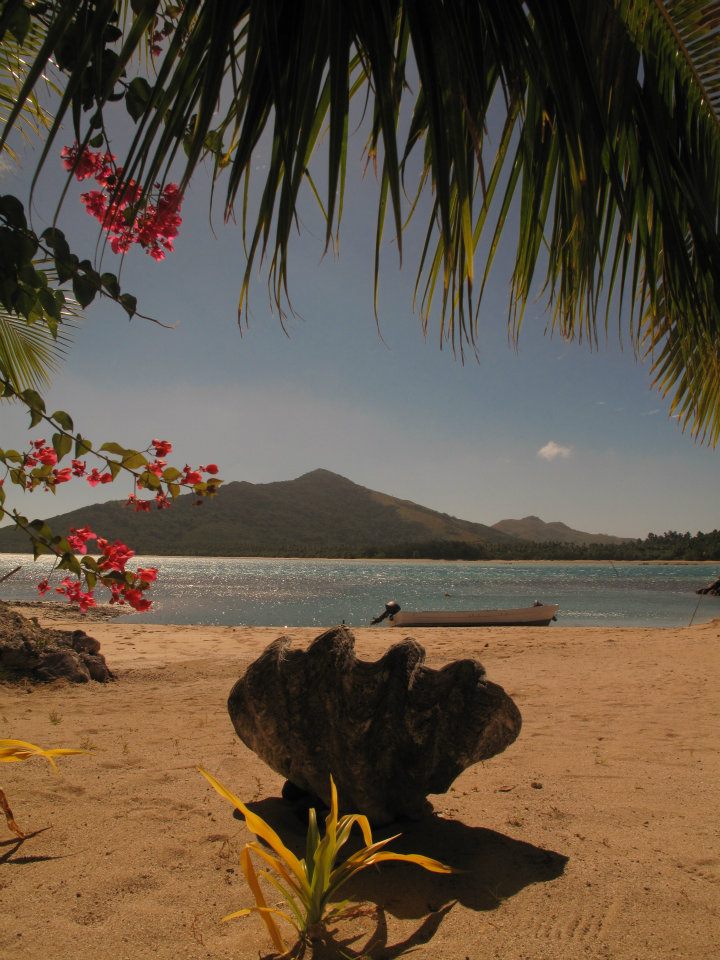 Life is funny, one minute you are striding down a certain path, and the next, tragedy strikes like a metaphorical avalanche and the path is swept away from under you. But all the cliches are true…. out of the darkness comes the light…..as one door closes another opens…… And so it was that a disaster on the harsh rocky island of Gran Canaria in Spain seven years ago would change my life in ways I never could have imagined.
Fate, and the trade winds blew me to Fiji where I landed a job on a remote island in the Yasawas. Here I worked with a local, tradition-bound community domineered by a powerful autocratic chief, and answered to a wealthy and eccentric American billionaire (owner of the island where Blue Lagoon was filmed). It was a crazy time typified by cyclones, a coup, and suffocating heat, of sabotage and skullduggery….where cheeky spirits roamed by land and sea, and tales of cannibalistic forebears were shared over many a bowl of kava. But what i remember most is the laughter, the singing, the awe inspiring beauty and the big beautiful smiles of the Fijians who welcomed me to their island home. Continue reading “Back to Fiji”
24 hours in Jakarta
Jakarta doesn’t enjoy the best of reputations ,but anyone who spends any amount of time in Indonesia is bound to pass through the sweltering capital at some point. I have 24 hours and am determined to find something endearing about the city which is home to ten million people. I arrive two weeks after the bombs, but apart from the area directly around the Marriot and the Ritz Carlton, life has continued as normal. Continue reading “24 hours in Jakarta”


Fivelements, Puri Ahimsa sits at the end of a narrow country lane surrounded by rice paddys and fields of ripening corn. Thatched circular buildings with conical roofs reach for the sky, the gardens are filled with lush foliage, and the gushing of a fast flowing river intermingles with birdsong. It is the ideal setting for a healing sanctuary and from the moment I enter the spacious grounds I am immediately aware of a shift of energy, a kind of higher vibration.


I have a traditional Balinese healing treatment that is a mix of reflexology and chakra balancing with Pak Dewa, a wonderful and powerful energy healer. At times the session is painful and I shed tears, but by the end my spirit is soaring. Afterwards I sit on the verandah drinking ginger tea and reflecting on my life and my need to restore balance.

DESA SENI
This led me to Desa Seni a boutique resort/arts village in Caggu that offers a variety of yoga classes. I have practiced yoga in many beautiful places around the world but the Desa Seni experience is unique. Traditional wooden houses from all over Indonesia have been transplanted into a fairy tale like setting with pretty vegetable gardens, lush tropical foliage and an atmosphere that creates a sense of well being from the moment you enter.




 Travel Media Specialist